Systems Security Lab
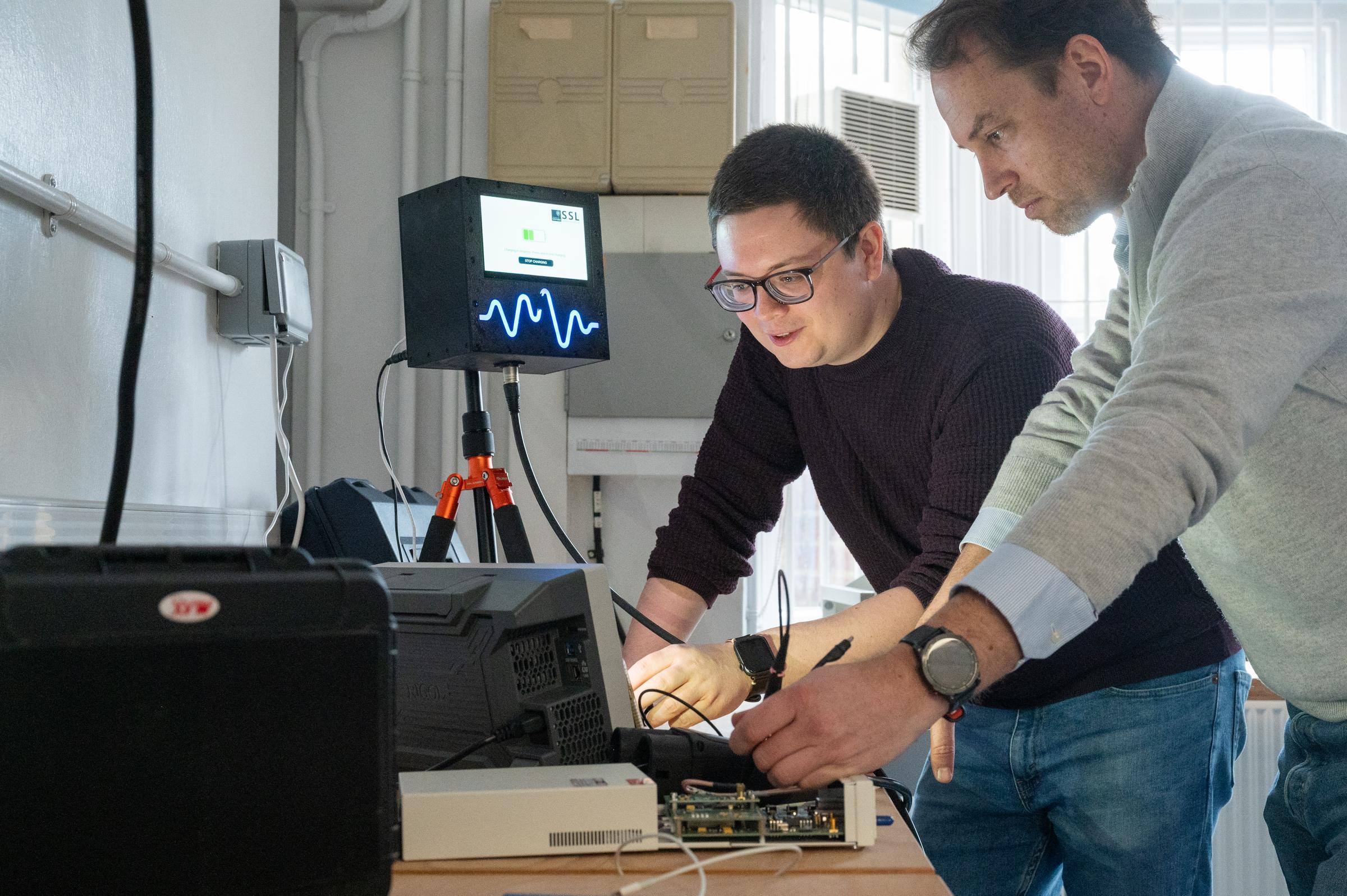
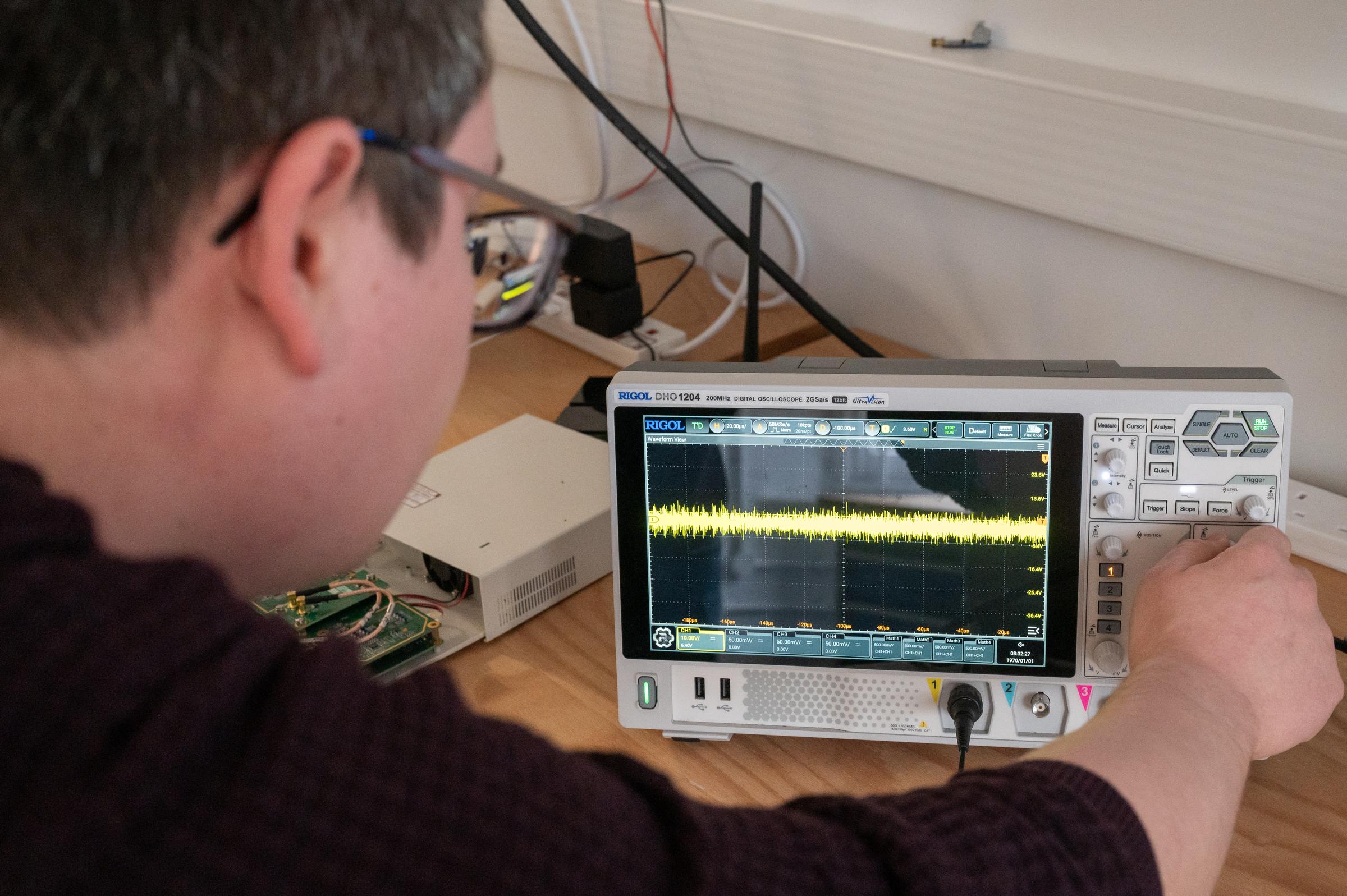
The Systems Security Lab is a research group at the University of Oxford, headed by Professor Ivan Martinovic. Our current research focuses on the security of space systems and of artificial intelligence, building on past work in aviation, biometrics, electric vehicles, the Internet of Things and sensors, and malware and networks.
As part of our research we are a founding member of OpenSky, a participatory sensor network which aims at collecting real-world air transportation communication data, such as ADS-B/Mode-S at large scale (covering over 720,000 km² in Europe). It offers insights into the ADS-B communication channel, characterising typical reception quality and loss patterns in the real world. It is intended to serve researchers from different areas as a solid basis for realistic evaluations and simulations.
Research
Space Systems Security
Studying vulnerabilities in space systems and what can be done to prevent them.
AI Security
Investigating attack vectors within machine learning algorithms.

Past topics
- Aviation Security
- Biometric Security
- Electric Mobility Security
- IoT and Sensor Security
- Malware and Network Security
Latest Publications
Joshua Smailes, Sebastian Köhler, Simon Birnbach, Martin Strohmeier, Ivan Martinovic.
ACM Transactions on Privacy and Security. October 2025.
Abstract:As satellite systems become a greater part of critical infrastructure, they have become a significantly more appealing target for attacks. The availability of cheap off-the-shelf radio hardware has made signal spoofing and physical layer attacks more accessible than ever to a wide range of adversaries, from hobbyists to nation-state actors. Legacy systems are particularly vulnerable due to their lack of cryptographic security, and cannot be patched to support novel security measures. In this article, we use radio transmitter fingerprinting to authenticate satellite downlinks, using characteristics of the transmitter hardware expressed as impairments on the physical layer radio signal. Our SatIQ system employs a Siamese neural network and an autoencoder to extract an efficient encoding of message headers that preserves identifying information. We focus on high sample rate fingerprinting, making device fingerprints difficult to forge without similarly high sample rate transmitting hardware. We collected 10290000 messages from the Iridium satellite constellation at 25 MS/s, and demonstrate that the SatIQ model trained on this data maintains performance over time without retraining, and can be used on new transmitters with no impact on performance. We analyze the system’s robustness against weather and signal factors, and demonstrate its effectiveness under attack, achieving an Equal Error Rate of 0.072 and ROC AUC of 0.960. We conclude that our techniques are useful for building fingerprinting systems that are effective at authenticating satellite communication, maintain performance over time and across satellite replacement, and provide robustness against spoofing and replay by raising the required budget for attacks.
PDF DOIJoshua Smailes, Edd Salkield, Sebastian Köhler, Simon Birnbach, Martin Strohmeier, Ivan Martinovic.
2nd Workshop on Security of Space and Satellite Systems (SpaceSec). March 2024.
Abstract:In the wake of increasing numbers of attacks on radio communication systems, a range of techniques are being deployed to increase the security of these systems. One such technique is radio fingerprinting, in which the transmitter can be identified and authenticated by observing small hardware differences expressed in the signal. Fingerprinting has been explored in particular in the defense of satellite systems, many of which are insecure and cannot be retrofitted with cryptographic security. In this paper, we evaluate the effectiveness of radio fingerprinting techniques under interference and jamming attacks, usually intended to deny service. By taking a pre-trained fingerprinting model and gathering a new dataset in which different levels of Gaussian noise and tone jamming have been added to the legitimate signal, we assess the attacker power required in order to disrupt the transmitter fingerprint such that it can no longer be recognized. We compare this to Gaussian jamming on the data portion of the signal, obtaining the remarkable result that transmitter fingerprints are still recognizable even in the presence of moderate levels of noise. Through deeper analysis of the results, we conclude that it takes a similar amount of jamming power in order to disrupt the fingerprint as it does to jam the message contents itself, so it is safe to include a fingerprinting system to authenticate satellite communication without opening up the system to easier denial-of-service attacks.
PDF DOIJoshua Smailes, Sebastian Köhler, Simon Birnbach, Martin Strohmeier, Ivan Martinovic.
Proceedings of the 2023 ACM SIGSAC Conference on Computer and Communications Security (CCS 23). November 2023.
Abstract:Due to an increase in the availability of cheap off-the-shelf radio hardware, signal spoofing and replay attacks on satellite ground systems have become more accessible than ever. This is particularly a problem for legacy systems, many of which do not offer cryptographic security and cannot be patched to support novel security measures. Therefore, in this paper we explore radio transmitter fingerprinting in the context of satellite systems. We introduce the SatIQ system, proposing novel techniques for authenticating transmissions using characteristics of the transmitter hardware expressed as impairments on the downlinked radio signal. We look in particular at high sample rate fingerprinting, making device fingerprints difficult to forge without similarly high sample rate transmitting hardware, thus raising the required budget for spoofing and replay attacks. We also examine the difficulty of this approach with high levels of atmospheric noise and multipath scattering, and analyze potential solutions to this problem. We focus on the Iridium satellite constellation, for which we collected 1705202 messages at a sample rate of 25 MS/s. We use this data to train a fingerprinting model consisting of an autoencoder combined with a Siamese neural network, enabling the model to learn an efficient encoding of the message headers that preserves identifying information. We demonstrate the fingerprinting system's robustness under attack by replaying messages using a Software-Defined Radio, achieving an Equal Error Rate of 0.120, and ROC AUC of 0.946. Finally, we analyze its stability over time by introducing a time gap between training and testing data, and its extensibility by introducing new transmitters which have not been seen before. We conclude that our techniques are useful for building fingerprinting systems that are stable over time, can be used immediately with new transmitters without retraining, and provide robustness against spoofing and replay attacks by raising the required budget for attacks.
PDF DOISimon Birnbach, Joshua Smailes, Richard Baker, Ivan Martinovic.
2023 IEEE/AIAA 42nd Digital Avionics Systems Conference (DASC). October 2023.
Abstract:Despite their substantially different purposes, a common issue both for many legacy data links and many onboard data buses used in aviation is a lack of authentication and thus a vulnerability to spoofing and message manipulation attacks. This problem has been discussed at length for some prominent technologies of both sorts (e.g., ADS-B, ARINC 429) but is common in many more cases (e.g., ACARS, CPDLC, MIL-STD-1553, RS-485). For ground data links, attacks can take place over-the-air, while for onboard buses an attacker requires some physical access to an aircraft. Yet, in both cases an attacker’s goal is to obtain control of a transceiver on the communication channel. As such, hardware fingerprinting methods are useful in both contexts. Prior work has applied such methods to specific protocols. We now propose a transferable fingerprinting scheme that has applicability in both contexts, describe our experiences in applying it for each and evaluate its performance in benign and malicious conditions. As replacing legacy communication links with newer, more secure protocols is practically challenging, the improvements to practical deployment offered by our system represent a meaningful benefit for real deployment efforts.
PDF DOI